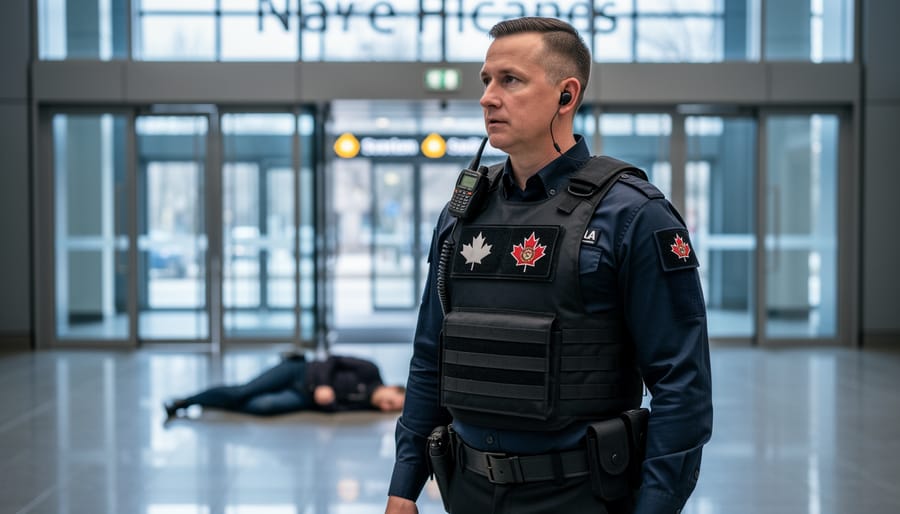
A use of force model is a structured decision-making framework that guides security professionals and law enforcement officers in selecting appropriate responses to threats or resistance, ranging from verbal communication to physical intervention. It serves as both a training foundation and a legal safeguard, helping personnel assess risk, de-escalate situations when possible, and apply only the minimum necessary force to protect people and property. If you’re seeking training in this framework, you’ll need to complete a certified program that covers threat assessment, proportional response, legal standards, and practical techniques, typically through a provincially recognized security training provider or law enforcement academy.
The RCMP is currently modernizing its use of force framework through a new Public and Police Safety Framework that emphasizes human-centered approaches, reflecting a broader shift across Canadian policing toward accountability and de-escalation. For private security professionals in Quebec and beyond, understanding this model isn’t optional. It’s a core competency that demonstrates professionalism, protects clients, and reduces liability exposure. Security guards, bouncers, loss prevention officers, and event security personnel all rely on this training to make split-second decisions under pressure.
What makes a use of force model effective isn’t just the physical tactics it teaches. The framework prioritizes situational awareness, communication skills, and legal compliance. Officers learn to recognize when presence alone can deter a threat, when verbal commands are appropriate, and when physical intervention becomes necessary. This graduated approach protects both the officer and the subject, reducing injury rates and legal claims.
Whether you’re a business owner evaluating security providers or a professional pursuing certification, understanding how trained personnel apply force legally and ethically gives you confidence in high-stakes situations. The following sections break down eligibility requirements, the certification process, your rights and obligations under Canadian law, and where to access authoritative resources.
What Is the Use of Force Model?
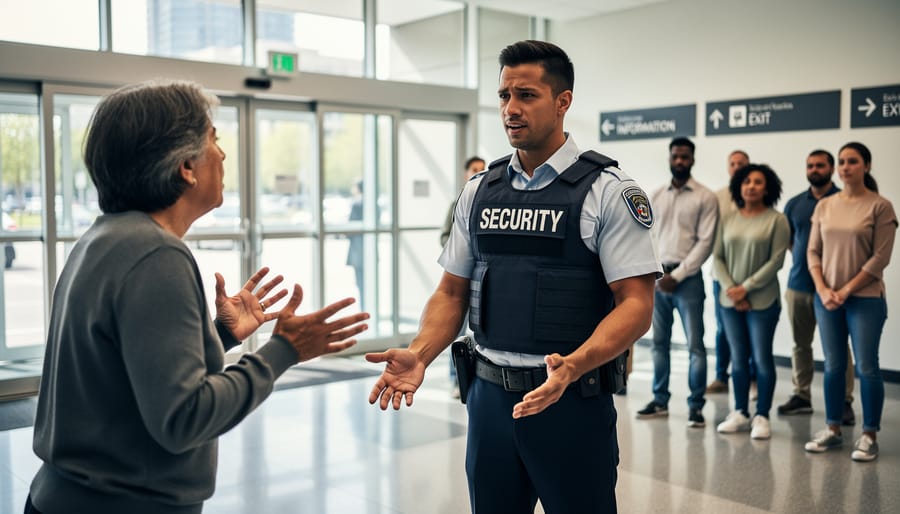
The use of force model is a decision-making framework that helps security professionals and law enforcement determine the appropriate level of response in any given situation. Rather than a rigid set of rules, it provides structured guidance for escalating or de-escalating force based on the behavior of the person involved, the risks present, and the goal of resolving the situation safely. At its core, the framework prioritizes using the minimum amount of force necessary to control a situation while protecting everyone’s safety and dignity.
Modern use of force frameworks operate on a continuum that begins with the officer’s mere presence and progresses through communication, physical control techniques, and, only when absolutely necessary, higher levels of force. The RCMP is modernizing its use of force framework to better reflect policing values through a human-centered approach, recognizing that effective security work depends as much on communication skills and situational awareness as on physical techniques. This shift acknowledges that the best outcomes happen when security professionals can remain calm and resolve situations through presence and dialogue rather than physical intervention.
The framework recognizes that most security situations can be managed without physical force. A trained security professional’s confident presence, clear communication, and ability to read body language often prevent conflicts from escalating. When verbal techniques prove insufficient, the model outlines a progression: soft physical control techniques like guiding or holding, then firmer techniques if resistance continues, always with the goal of gaining compliance and ensuring safety rather than punishment.
What makes the model protective for security personnel is its foundation in legal defensibility and professional standards. When a security professional follows this framework and can articulate why each level of force was necessary based on the person’s actions and the risks involved, they operate within a recognized, justifiable decision-making structure. The framework also protects the public by establishing clear boundaries: force must be proportionate to the threat, necessary given the circumstances, and immediately de-escalated once control is achieved.
This human-centered approach acknowledges that people in crisis or conflict deserve respect and measured responses. Security professionals trained in this model understand they’re not simply reacting to behavior but making deliberate, defensible choices that prioritize everyone’s safety while maintaining order and protecting property.
The Evolving Use of Force Framework in Canada
Canada’s approach to use of force in security and law enforcement is undergoing significant modernization, reflecting a broader shift toward frameworks that prioritize human dignity, trauma awareness, and proportionate response. The RCMP is currently updating its use of force framework through a new Public and Police Safety Framework designed to better reflect contemporary policing values through a human-centered approach. This modernization signals an important evolution from traditional force continuum models toward systems that emphasize de-escalation, communication, and understanding the psychological and social contexts in which security interactions occur.
A truly trauma-informed approach to security goes beyond simply reducing physical force. It requires security professionals to recognize how past trauma can influence a person’s behavior during an encounter, to adjust communication strategies accordingly, and to prioritize preserving dignity even in difficult situations. This means training security personnel not only in physical intervention techniques but also in recognizing signs of distress, employing calming communication methods, and understanding when presence and patience can resolve situations more effectively than escalation. Organizations committed to secure operations increasingly integrate these principles into their standard operating procedures, ensuring that force remains a last resort rather than a default response.
These evolving frameworks also emphasize ongoing professional development and access to current research. Public Safety Canada maintains a Canadian Policing Research Catalogue, a search tool providing access to books and resources from the libraries of Public Safety Canada, the Commission for Public Complaints Against the RCMP, and the Royal Canadian Mounted Police External Review Committee. This resource supports security professionals and law enforcement officers in staying current with evidence-based practices, legal updates, and emerging approaches to public safety.
The shift toward human-centered frameworks reflects a recognition that effective security isn’t just about controlling situations, it’s about building trust, reducing harm, and ensuring that interventions are proportionate, accountable, and rooted in respect for the people being served. For security organizations and professionals, this means adopting training and policies that keep pace with these modernized standards.
Who Needs Use of Force Training
Use of force training is mandatory for several categories of security professionals in Canada, though specific licensing requirements vary by province. If you’re considering security guard jobs or exploring careers in Montreal understanding these training obligations is essential before you begin the licensing process.
Licensed security guards performing access control, patrol duties, or any function where physical intervention may become necessary must complete use of force certification. This applies whether you work in retail environments, corporate offices, residential properties, or event security. Mobile patrol officers who respond to alarms, conduct property checks, and may encounter trespassers or security threats require this training as part of their provincial licensing. Loss prevention personnel who detain suspected shoplifters need use of force certification because their role involves physical restraint and citizen’s arrest authority. Private investigators who conduct surveillance or investigations where confrontation is possible often pursue this training, though requirements depend on the nature of their work and provincial regulations.
- Licensed security guards: Must be 18 or older, hold a valid security licence, and pass a criminal background check
- Mobile patrol officers: Require security licensing, clean driving record, and completion of basic security training
- Loss prevention specialists: Need security guard licence in most provinces, proof of employment in retail security, and background clearance
- Private investigators: Must hold investigator licence where required by province, be 18 or older, and demonstrate relevant experience
- Aspiring security professionals: Must meet age minimums (typically 18), have no disqualifying criminal convictions, and complete prerequisite security training
Provincial licensing bodies set specific prerequisites. In Quebec, security agents must obtain their permit from the Bureau de la sécurité privée, which requires completion of an approved training program that includes use of force modules. Ontario’s Ministry of the Solicitor General mandates use of force training for anyone seeking a security guard licence. British Columbia requires completion through the Security Services Act framework. Age minimums typically start at 18, though some provinces allow 19 as the threshold.
Background checks are universal. You’ll undergo criminal record screening, and certain convictions disqualify candidates permanently while others require waiting periods. Most provinces require proof of legal work authorization in Canada. Training providers verify these prerequisites before enrollment.
Organizations like Montreal Security Services seek candidates with strong workplace skills including communication, de-escalation abilities, and sound judgment, all of which complement use of force training. The company supports staff through the certification process and maintains high standards for ongoing professional development.
How to Complete Use of Force Training and Certification
Obtaining use of force training begins with finding an accredited provider approved by your provincial security licensing authority. In Ontario, the Ministry of the Solicitor General maintains a list of approved training providers. Quebec’s Bureau de la sécurité privée regulates security training programs, while British Columbia’s Security Programs and Police Technology Division oversees certification. Contact your provincial regulatory body to verify that a training provider holds current accreditation before enrolling.
Most use of force courses require prerequisites. You must be at least 18 years old, hold a valid security guard license or be actively pursuing one, and pass a criminal background check. Some providers require a basic first aid certification before starting use of force training. Expect to submit proof of identity, licensing status, and any required clearances during registration.
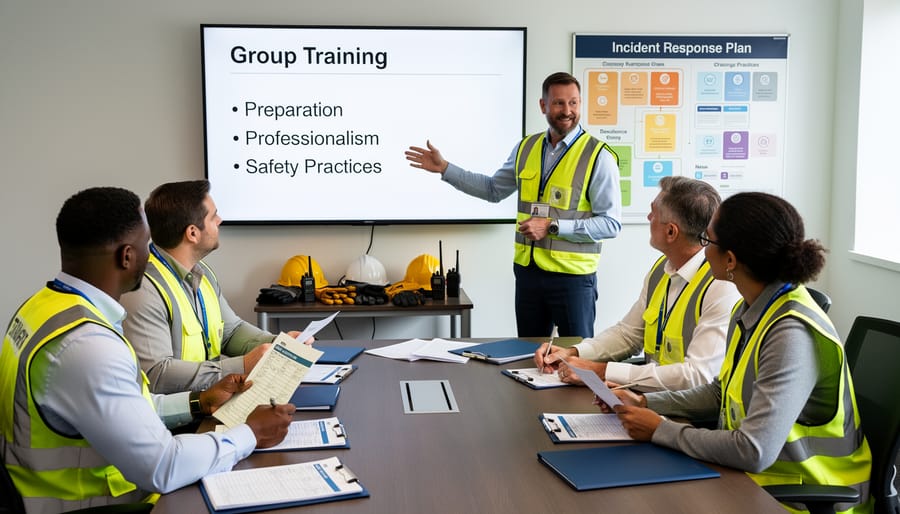
The training itself typically spans two to five days, depending on provincial requirements and the depth of instruction. Classroom sessions cover the legal framework for applying force, de-escalation strategies, threat assessment, and documentation obligations. Instructors explain the progression of force options and when each becomes appropriate. You’ll learn to recognize behavioral cues that signal escalating situations and practice verbal techniques to resolve conflicts without physical intervention.
Scenario-based practice forms a significant portion of training. You’ll work through simulated confrontations that mirror real-world security situations: an aggressive individual refusing to leave property, a physical altercation between patrons, or a suspected shoplifter attempting to flee. These exercises let you apply de-escalation tactics, make split-second decisions about appropriate force levels, and practice the physical techniques you’ve learned. Instructors observe and provide feedback on your judgment, communication, and execution.
Physical technique instruction covers defensive tactics, control holds, restraint methods, and proper handcuffing procedures. You’ll practice techniques repeatedly until they become second nature. Training emphasizes minimizing harm while maintaining control and always using the lowest effective level of force. Expect a physically demanding component that requires active participation.
Assessment includes written exams testing your knowledge of legal standards, force options, and reporting requirements. Practical evaluations measure your ability to execute techniques correctly and make sound decisions during scenario exercises. You must demonstrate both competence and proper judgment to pass.
Certification timelines vary by province. In Ontario, use of force certification typically remains valid for two years. Quebec requires renewal every three years, while some provinces mandate annual refresher training. Renewal involves a shorter recertification course that updates you on evolving frameworks, such as the RCMP’s modernized Public and Police Safety Framework emphasizing human-centered approaches, and tests your retention of critical skills.
Mark renewal dates on your calendar immediately upon certification. Working with an expired use of force certificate violates licensing requirements and can result in suspension. Many employers, including established security services, track certification expiry dates and arrange recertification training for their personnel, but ultimately you’re responsible for maintaining valid credentials.
Prepare for training by arriving rested and wearing comfortable athletic clothing. Bring required documentation, stay engaged throughout instruction, and practice techniques diligently. The investment in proper training protects you legally, enhances your professional capabilities, and ensures you can respond to challenging situations with confidence and competence.
Rights and Responsibilities When Applying Force

Security professionals in Canada operate under a distinct legal framework that defines both their authority and their accountability when force becomes necessary. Unlike sworn police officers, private security personnel derive their authority primarily from the same laws that apply to any Canadian citizen, with additional responsibilities imposed by provincial licensing regulations and their contractual duties to protect property and persons.
The legal foundation for security guards applying force rests on the principles of self-defense, defense of others, and defense of property as outlined in the Criminal Code of Canada. Sections 34 and 35 permit reasonable force to protect oneself or another person from assault, while Section 35 addresses defense of property. The critical word in all these provisions is “reasonable.” Courts assess whether the force used was proportionate to the threat faced, meaning security professionals must be able to articulate why their response matched the specific circumstances. A security officer cannot justify striking someone who is merely verbally abusive, but physical intervention may be warranted if that person attempts to assault a staff member or another patron.
Provincial licensing bodies impose additional obligations on security personnel. In most jurisdictions, security guards must immediately report any use of force to their employer and, depending on the severity, to the licensing authority. This documentation serves multiple purposes: it creates a contemporaneous record of events while details are fresh, it demonstrates professional accountability, and it provides essential evidence if legal questions arise later. Failure to document properly can result in license suspension or revocation, even if the force itself was justified.
Security professionals also face liability considerations that law enforcement officers do not encounter in the same way. While police have qualified immunity for actions taken in good faith during the course of their duties, private security personnel can be sued civilly for assault, battery, or false imprisonment if their actions exceed lawful authority. The company employing them may also face vicarious liability. This legal exposure underscores why proper training and adherence to use of force principles are not merely procedural requirements but essential protections for both the individual guard and the organization.
When security personnel act within the scope of their training and apply only the force necessary to address a genuine threat, Canadian law provides clear protections. The Criminal Code’s self-defense provisions apply equally to security professionals as to any citizen. However, the threshold for “reasonable” is higher for trained security personnel because they are expected to possess de-escalation skills and judgment that untrained individuals may lack. Courts will examine whether the security officer attempted to de-escalate, whether they could have withdrawn safely, and whether the level of force was the minimum necessary.
Consequences for improper force application range from disciplinary action and license revocation to criminal charges and civil lawsuits. A security guard who strikes a restrained individual or applies force out of frustration rather than necessity can face assault charges, just as any other person would. The evolving emphasis on trauma-informed and human-centered approaches, reflected in frameworks like the RCMP’s Public and Police Safety Framework modernization, sets an increasingly high standard for professional conduct. Security professionals must understand that their authority is limited, their actions are scrutinized, and their first obligation is always to use the least amount of force necessary to resolve a situation safely.
Resources and Support for Security Professionals

Security professionals have access to a wide range of resources to support their ongoing development and stay current with evolving use of force frameworks. Knowing where to turn for guidance, training updates, and regulatory information helps security personnel maintain high professional standards and operate within legal boundaries.
Public Safety Canada maintains the Canadian Policing Research Catalogue, a search tool that provides access to books and resources housed in the libraries of Public Safety Canada, the Commission for Public Complaints Against the RCMP, and the Royal Canadian Mounted Police External Review Committee. This catalogue offers security professionals research materials on best practices, policy developments, and evolving approaches to public safety. It’s particularly valuable as frameworks modernize, like the RCMP’s ongoing update to its use of force approach through the new Public and Police Safety Framework, which emphasizes a human-centered methodology.
Provincial security licensing bodies serve as the primary regulatory touchpoint for security professionals. Each province sets its own licensing requirements, continuing education mandates, and use of force training standards. Contact your provincial regulator to confirm certification renewal deadlines, approved training providers, and any changes to use of force protocols in your jurisdiction.
- Public Safety Canada’s Canadian Policing Research Catalogue for professional development materials and policy research
- Provincial security licensing authorities for certification requirements and approved training providers
- Industry associations such as ASIS International and the Canadian Security Association for networking and professional standards
- Accredited training providers offering use of force courses, de-escalation workshops, and scenario-based practice
- Employer-sponsored professional development programs and internal training resources
Organizations like Montreal Security Services recognize that properly trained personnel deliver safer, more effective security solutions. The company supports staff through access to ongoing training, resources on emerging frameworks, and guidance on applying use of force principles in real-world situations. This commitment to professional development ensures security teams stay informed about modernized approaches, including trauma-informed practices that align with evolving Canadian policing values.
Stay engaged with your professional network and regulatory updates. Frameworks continue to evolve, and security professionals who actively seek out current information position themselves to provide the highest standard of service while protecting their own legal standing.
How to Apply or Complete the Process
Completing your use of force training and certification requires following a structured process through your provincial licensing authority. While specific requirements vary by province, the general pathway remains consistent across Canada.
Start by confirming your eligibility with your province’s security licensing body. In Ontario, this means the Ministry of the Solicitor General; in British Columbia, the Security Programs and Police Technology Division; in Quebec, the Bureau de la sécurité privée. You’ll need to meet basic requirements: minimum age (typically 18 or 19), clean criminal record check, and legal right to work in Canada.
Next, enroll in an approved use of force training course through an accredited provider recognized by your provincial regulator. These courses combine classroom instruction with hands-on practice and must meet provincial standards. Training typically runs 16 to 40 hours depending on jurisdiction and course level.
After completing the training, you’ll undergo practical and written assessments. Passing scores qualify you for certification, which your training provider submits to the provincial licensing authority. Processing times range from two to six weeks.
Once certified, maintain your qualification through renewal requirements, usually every one to three years. Renewal involves refresher training to ensure you stay current with evolving frameworks and techniques. Keep documentation of all training, certifications, and renewals for compliance verification.
At-a-Glance Details
The use of force model in Canadian security provides a structured framework that guides decision-making in high-pressure situations. Understanding the key components and requirements helps security professionals apply force appropriately while protecting everyone involved.
| Component | Purpose | Key Consideration |
|---|---|---|
| Officer Presence | Establish authority and deter conflict | Professional appearance and confident demeanor often prevent escalation |
| Communication | De-escalate through verbal intervention | Clear instructions and active listening reduce need for physical force |
| Physical Control | Gain compliance when verbal methods fail | Techniques must be proportionate to resistance level |
| Intermediate Weapons | Control serious threats to safety | Requires additional certification and ongoing training |
| Lethal Force | Protect life in imminent danger situations | Reserved for law enforcement in most jurisdictions |
Security professionals must continuously assess each situation and select the lowest effective level of force. The modern approach emphasizes human-centered decision-making that accounts for mental health, trauma, and de-escalation opportunities before escalating to physical intervention.
Common Questions About Use of Force in Security
What is the Public and Police Safety Framework?
The Public and Police Safety Framework is the RCMP’s modernized approach to use of force that emphasizes a human-centered methodology. It’s being developed to better reflect current policing values and represents a shift toward trauma-informed practices in Canadian law enforcement.
How often must use of force certification be renewed?
Most provinces require security professionals to renew their use of force certification every one to two years, though specific timelines vary by jurisdiction. Renewal typically involves refresher training, updated scenario practice, and reassessment to ensure skills remain current.
What happens if force is used improperly?
Improper use of force can result in criminal charges, civil liability, loss of security license, and termination of employment. Security professionals are legally required to document all force incidents and may face investigation by licensing authorities or law enforcement if force exceeds what’s necessary and proportionate to the situation.
What does it take to build a trauma-informed security approach?
A trauma-informed approach requires training that emphasizes de-escalation first, recognizes how stress and trauma affect behavior, and prioritizes communication over physical intervention. It involves understanding that many individuals in crisis situations may be experiencing psychological distress, and that patience and empathy can often resolve situations more effectively than force.
Security professionals navigating these evolving standards benefit from employers who prioritize ongoing education and modern training frameworks. Organizations committed to human-centered approaches invest in regular professional development, access to current research through resources like Public Safety Canada’s Canadian Policing Research Catalogue, and continuous skill refinement that goes beyond minimum licensing requirements.
One persistent challenge in applying use of force principles involves balancing immediate safety needs with trauma-informed practices. Security personnel must make split-second decisions while considering the mental state of individuals involved, the potential for escalation, and the least intrusive intervention that will resolve the situation safely. This requires not just technical training but also emotional intelligence and situational awareness that develops through experience and mentorship.
For those considering careers in security, understanding these frameworks before starting demonstrates professional seriousness. If you’re interested in working with an organization that values modern, ethical security practices, we invite you to join our team at Montreal Security Services, where comprehensive training and ongoing support help professionals apply force responsibly and effectively.
Proper use of force training isn’t just a regulatory requirement, it’s the foundation of ethical, effective security services. Security professionals who understand when and how to apply force appropriately protect both the public and themselves, operating within clear legal boundaries while de-escalating situations whenever possible. As Canada modernizes its approach to policing and security through frameworks like the RCMP’s Public and Police Safety Framework, the emphasis on human-centered, trauma-informed practices continues to grow. This evolution reflects what communities expect: security personnel who can assess complex situations, exercise sound judgment, and prioritize safety without resorting to unnecessary force.
Montreal Security Services remains committed to this standard. Our team receives comprehensive training in use of force principles, ensuring every guard, mobile patrol officer, and security specialist operates with the skills and knowledge that modern security demands. We invest in ongoing professional development because our clients deserve personnel who can respond confidently and appropriately in any situation.
Whether you’re considering a career in security or seeking professional security solutions for your business or property, we’re here to help. Explore opportunities to join our team, or contact Montreal Security Services to discuss how our trained professionals can protect what matters most to you. Experience the difference that proper training and a commitment to human-centered security practices make.