
Customized services for responsible online-casino play address a growing workplace security challenge: employees accessing gambling platforms like MoonBet btc casino during work hours, creating liability risks, productivity losses, and potential regulatory concerns for business owners. Security service providers now offer tailored digital monitoring solutions that balance access control with employee privacy, combining network management tools, policy frameworks, and educational programs to mitigate these risks without creating an atmosphere of distrust.
The approach works because it treats online gambling access as a multifaceted security issue rather than simply blocking websites. Effective solutions involve customized firewall configurations, real-time monitoring alerts, and clear usage policies that employees understand before implementation. A manufacturing firm in Ohio reduced gambling-related incidents by 87% within six months after partnering with a security provider who designed a phased approach: initial risk assessment, employee education sessions, and graduated enforcement tied to their existing security protocols.
Business owners face unique pressures in 2026 as cryptocurrency casinos and mobile gambling platforms multiply, making traditional website blocklists obsolete. The most successful interventions don’t rely on prohibition alone. They incorporate employee assistance resources, transparent communication about monitoring practices, and integration with broader workplace security systems already protecting sensitive data and physical assets. This comprehensive strategy protects both the organization’s digital infrastructure and its workforce, creating accountability while respecting individual rights.
The Hidden Workplace Threat: Online Casino Access
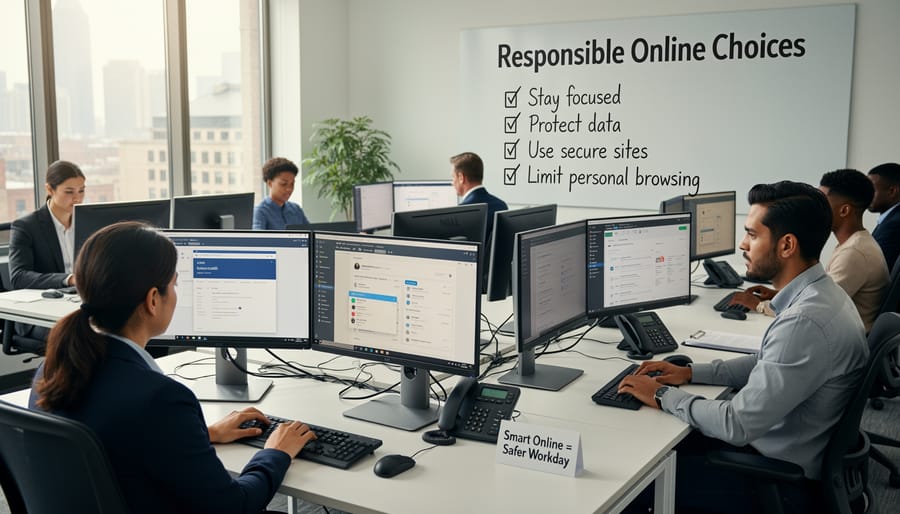
Unrestricted internet access has become a standard workplace expectation, but it opens doors to risks that many business owners haven’t fully considered. Online casino platforms, accessible from any device with a browser, present a particularly insidious threat that combines multiple security concerns. Unlike obvious malware or phishing attempts that employees recognize as dangers, gambling sites appear as legitimate entertainment, making them harder to address through conventional security awareness training.
The immediate impact shows up in productivity metrics. Employees spending work hours on casino games represent direct financial losses through wasted time, but the deeper costs emerge from distraction and divided attention. A worker toggling between spreadsheets and slot machines isn’t just unproductive during gambling sessions; their overall work quality deteriorates throughout the day. Security personnel monitoring facilities can’t maintain proper vigilance while chasing bonus rounds on their phones.
The security vulnerabilities extend beyond lost productivity:
- Data breaches when employees enter payment information on unsecured gambling platforms using company networks
- Financial fraud as desperate employees with gambling problems access company funds or client accounts
- Compromised credentials from phishing sites disguised as legitimate casinos
- Decreased vigilance among security staff distracted by gambling activities during shifts
- Legal liability when company devices or networks facilitate illegal gambling in jurisdictions where it’s prohibited
Many online casino platforms, particularly unlicensed ones, serve as vectors for malware and credential harvesting. Employees who create accounts using work email addresses expose corporate networks to spam, targeted phishing, and social engineering attacks. The same approach used to protect against scams in other financial contexts applies here, but requires specialized policies addressing gambling-specific risks.
The legal dimension creates additional complications. Companies can face liability if employee gambling occurs on company time or devices, particularly in jurisdictions with strict online gambling regulations. Human resources departments report increased incidents of workplace theft and financial irregularities correlated with problem gambling among staff.
Customized Security Solutions for Digital Risks
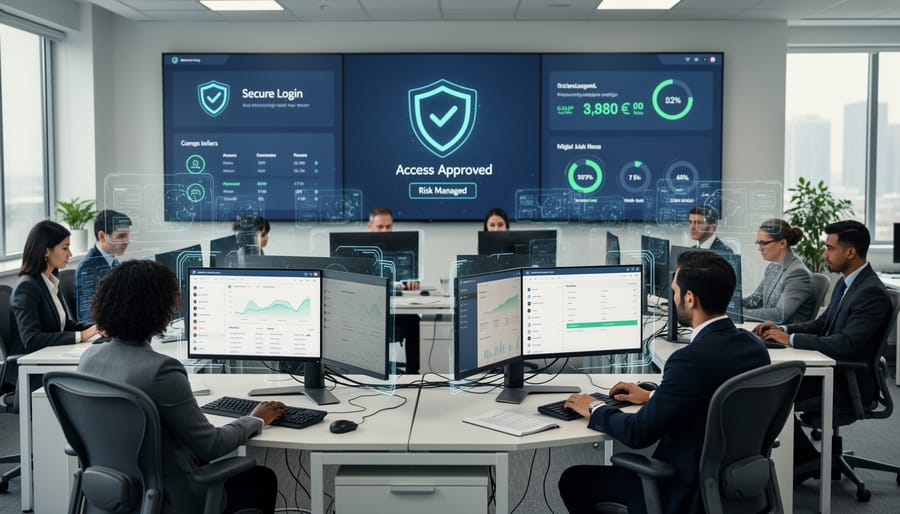
Assessment and Policy Development
Security assessments begin with a thorough review of your current network infrastructure, employee internet usage patterns, and existing digital-access policies. Consultants examine which devices connect to your network, when peak browsing occurs, and whether previous incidents involved inappropriate site access. They’ll interview department heads to understand workflow requirements, sales teams may need broader access than production staff, for instance.
The assessment identifies specific vulnerabilities: Are personal devices connecting to company Wi-Fi? Do employees work remotely without VPN protection? Which roles handle sensitive financial data? These details shape your acceptable-use policy rather than applying a one-size-fits-all template.
Effective policies clearly define what constitutes acceptable internet use during work hours while avoiding vague prohibitions. Instead of simply banning “entertainment sites,” a well-crafted AUP specifies categories like gambling platforms, streaming services during core hours, or sites known for malware risks. For guidance on structuring these documents, resources like how to create an AUP can provide frameworks that balance clarity with enforceability.
The best policies explain the reasoning behind restrictions, outline consequences for violations, and include employee input during development. This collaborative approach increases buy-in and reduces the perception that management is simply imposing surveillance. Regular policy reviews ensure your AUP evolves with emerging threats and changing work patterns.
Implementation Strategies
Modern security implementation starts with layered defense rather than total lockdown. Network-level filtering blocks gambling domains at the infrastructure level, preventing accidental access while maintaining transparency with employees about what categories are restricted. Smart filtering systems allow customized whitelists for departments requiring broader access, ensuring sales teams researching competitors or marketing staff analyzing trends aren’t hampered.
Monitoring solutions should focus on pattern detection, not individual surveillance. Dashboard analytics identify unusual bandwidth usage or repeated attempts to bypass restrictions without tracking every website visited. When triggers occur, the system alerts supervisors to address underlying issues rather than automatically punishing staff.
The most effective strategy pairs technical controls with proactive education. Monthly digital safety briefings contextualize why restrictions exist, emphasizing protection rather than mistrust. Some organizations create anonymous reporting channels where employees concerned about gambling problems can seek resources without fear.
Remote workers require different approaches. VPN-based protection extends filtering to home offices, while endpoint monitoring software provides visibility without invasiveness. Clear guidelines about personal versus work hours acknowledge the blurred boundaries of remote work while maintaining reasonable expectations during business time.
Promoting Responsible Behavior Through Security Education
The most effective defense against online gambling risks isn’t stricter monitoring, it’s teaching employees why responsible digital behavior matters. Security services that build trust through education consistently outperform those relying solely on restriction and surveillance.
Modern awareness training programs treat online casino access as one element within comprehensive digital safety education. Rather than singling out gambling, these initiatives address the broader spectrum of workplace internet risks: phishing attempts, malware downloads, data breaches, and productivity drains. When employees understand how their online choices affect network security, company reputation, and team performance, they make better decisions without feeling micromanaged.
Effective programs frame responsible behavior as professional competence, not rule-following. Training sessions might explore real scenarios: how a seemingly harmless casino site introduced malware that compromised client data, or how excessive gambling during work hours created coverage gaps that endangered site security. These concrete examples resonate far more than abstract policies.
The helpfulness principle guides content delivery. Instead of lecturing about prohibited activities, trainers provide practical tools: recognizing addictive behavior patterns, understanding the house-edge mathematics that make consistent winning impossible, accessing confidential support resources. Some programs incorporate the same secure operations framework used for physical security protocols, applying systematic risk assessment to digital habits.
One regional security provider reported that six months after implementing quarterly digital responsibility workshops, online gambling incidents dropped 73% while employee satisfaction scores improved. Workers appreciated being treated as partners in security rather than potential threats.
The integrity-centered approach acknowledges that adults will access the internet outside work. Training emphasizes personal responsibility and informed choice over blanket prohibition, creating a culture where employees self-regulate because they understand the stakes, not because they fear punishment.
Case Study: Manufacturing Facility Addresses Casino-Related Incidents
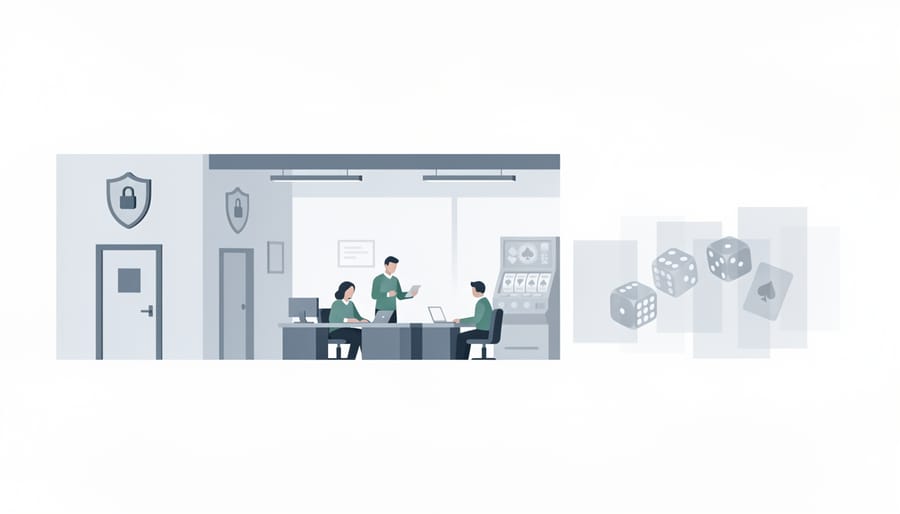
A mid-sized automotive parts manufacturer in Ontario approached our team after discovering several production-floor employees were regularly accessing online casino sites during their shifts. The incidents came to light when IT noticed unusual bandwidth consumption on tablets meant for quality-control data entry. Beyond the productivity concerns, management worried about potential data security risks from gambling sites accessed on devices connected to proprietary manufacturing systems.
Our assessment revealed that twelve employees across two shifts had created gambling accounts using company equipment, with some spending upward of ninety minutes per shift on casino sites. The facility’s existing internet filtering had focused primarily on social media and streaming services, leaving gambling domains unmonitored. We also identified that the behaviour stemmed partly from long periods of equipment downtime when workers had legitimate device access but insufficient alternative tasks.
The customized solution we implemented combined technical controls with cultural changes. We updated web filtering to block gambling domains while adding monitoring for casino-related keywords and payment processors. However, technical barriers formed only part of the strategy. We worked with management to develop clearer acceptable-use policies that employees helped shape, ensuring buy-in rather than resentment. The company also introduced productive downtime activities and adjusted break schedules to reduce idle periods when gambling temptation peaked.
Equally important, we conducted training sessions that addressed responsible technology use broadly, not singling out gambling. Topics ranged from password security to how to secure your webcam against unauthorized access, normalizing digital safety conversations. Within three months, casino-related access attempts dropped 94%, and HR reported zero disciplinary actions needed. Employee surveys showed 78% appreciated the clearer guidelines, and productivity metrics improved 12% during previously problematic shifts.
Balancing Protection with Privacy and Trust
When security services design monitoring solutions for online casino access, they must walk a careful line between protection and overreach. The most effective customized services recognize that employees are not simply risks to manage, they’re trusted team members whose privacy and dignity matter.
Transparent communication forms the foundation of ethical monitoring. Before implementing any internet filtering or access controls, security consultants should work with business owners to clearly communicate what will be monitored, why these measures exist, and how the data will be used. Employees who understand the reasoning behind policies, protecting company resources, reducing legal liability, maintaining network security, are far more likely to comply willingly than those who feel blindsided by surveillance.
Reasonable policies distinguish between legitimate protection and invasive overreach. Monitoring should focus on company-owned devices during work hours, not personal phones or after-hours activity. Security services that help clients establish proportionate responses, warning systems before disciplinary action, access to support resources for problem gambling, demonstrate both integrity and practical wisdom. A first-time violation doesn’t require termination; it requires conversation.
Maintaining workplace morale depends on positioning security measures as supportive rather than punitive. When security providers frame monitoring as part of comprehensive employee wellbeing, alongside ergonomic assessments, safety training, and mental health resources, it becomes less about catching wrongdoers and more about creating a healthy work environment. The goal isn’t to eliminate all personal internet use; it’s to prevent activities that genuinely harm productivity or expose the organization to risk.
Companies that balance vigilance with respect consistently see better outcomes than those that rely on heavy-handed surveillance alone.
Protecting your organization in 2026 means looking beyond locks and cameras. Digital threats, including workplace gambling risks, require the same vigilance and customized approach we’ve always brought to physical security. Whether you’re managing a corporate office, manufacturing facility, or remote workforce, the right security partner helps you address both traditional and emerging challenges with solutions tailored to your culture and needs.
We invite business owners to schedule a comprehensive security assessment that evaluates your organization’s full risk profile, from physical access points to digital vulnerabilities. Security professionals passionate about helping organizations thrive in this complex landscape can join our team and contribute to solutions that truly make a difference. Together, we create safer, more productive workplaces where people can focus on what matters most.