
Montreal offers career opportunities across a diverse range of industries, from technology and cybersecurity to government services, security operations, and beyond. The city’s bilingual business environment supports thousands of professionals, with approximately 1,900 government program officers alone and 566 security analyst positions currently available in Quebec. Whether you’re exploring entry-level roles or senior positions requiring 8+ years of experience, Montreal’s job market spans sectors that include IT infrastructure, application security engineering, physical security services, and public administration.
The city’s employment landscape reflects both established industries and emerging fields, particularly in AI-driven cybersecurity and automation. Many employers now offer professional development programs and training access, recognizing that continuous skill-building drives career advancement. Language proficiency plays a practical role in job qualifications here. Some positions require English fluency, while others call for bilingual capabilities in French and English, reflecting Montreal’s unique cultural and business environment.
Understanding which sectors are hiring, what experience levels employers seek, and how language requirements shape opportunities helps you target your job search effectively. The outlook varies by field: while some areas show limited growth projections for 2025-2027, others continue to expand, creating openings for professionals at multiple career stages. This guide examines Montreal’s career opportunities across key sectors, highlighting what employers are looking for and what job seekers need to know to pursue their professional goals in Canada’s second-largest city.
Montreal’s Job Market Landscape
Montreal’s job market stands out for its economic diversity and unique positioning as a bilingual hub. The city hosts thriving sectors across technology, aerospace, gaming, finance, healthcare, business services, and security, creating opportunities for professionals with varied skill sets and backgrounds. Unlike Toronto or Vancouver, Montreal offers a significantly lower cost of living while maintaining access to major employers and career advancement paths, making it particularly attractive for those starting or mid-career.
The bilingual landscape shapes Montreal’s employment environment in practical ways. Many roles require French or bilingual capability, though English-only positions exist, particularly in technology, cybersecurity, and international business sectors. This language dynamic creates competitive advantages for bilingual candidates while still welcoming skilled professionals who work primarily in English, depending on the industry and employer.
Current employment trends show strong demand in technology and cybersecurity, with 566 security analyst positions available across Quebec and growing needs for application security engineers and AI cybersecurity specialists. Government roles maintain steady if limited hiring, with approximately 1,900 people working in specialized public service occupations. The combination of established industries like aerospace and emerging sectors like artificial intelligence positions Montreal as both stable and forward-looking for job seekers evaluating long-term career prospects.
Technology and Cybersecurity Careers

Professional Development in Tech
Montreal’s tech sector provides robust professional development pathways, particularly valuable for those advancing into specialized security roles. Many employers offer access to high-quality training programs that keep professionals current with evolving cybersecurity threats and defensive technologies. These opportunities become essential as you progress beyond mid-level positions, where staying ahead of sophisticated attack vectors separates capable analysts from truly effective ones.
Professional development in tech security often extends beyond technical training to include leadership skills, cross-functional collaboration, and strategic thinking. Senior roles require not just deep technical expertise but the ability to communicate complex security requirements to non-technical stakeholders. Some positions offer exposure to emerging areas like AI-driven threat detection and automated security responses, which represent the future of the field.
For those interested in applying security principles across different contexts, experience with specialized facility security frameworks can complement cybersecurity knowledge, particularly when protecting physical infrastructure that houses critical digital assets. The combination of continuous learning opportunities and Montreal’s concentration of tech companies creates an environment where ambitious security professionals can build genuinely advanced careers.
Security Services and Protective Careers

Growing Your Security Career
Security services offer clear advancement paths for motivated professionals. Entry-level positions in mobile patrols or site monitoring build foundational essential workplace skills like communication and problem assessment. Guards who demonstrate vigilance and integrity typically advance to supervisory roles within two to three years, overseeing shift teams and coordinating response protocols.
Specialized career tracks emerge for those interested in technical security. Professionals can transition into security consulting, helping clients develop comprehensive protection strategies, or move into operations management implementing a secure operations framework across multiple facilities. Remote monitoring specialists manage sophisticated surveillance systems and coordinate field teams responding to alerts.
Working for companies with national operations provides distinct advantages. Professionals can transfer between Montreal branches and locations in other provinces, gaining diverse experience without changing employers. This mobility supports career growth while maintaining benefits and seniority, particularly valuable for those building long-term careers in protective services.
Government and Public Sector Opportunities
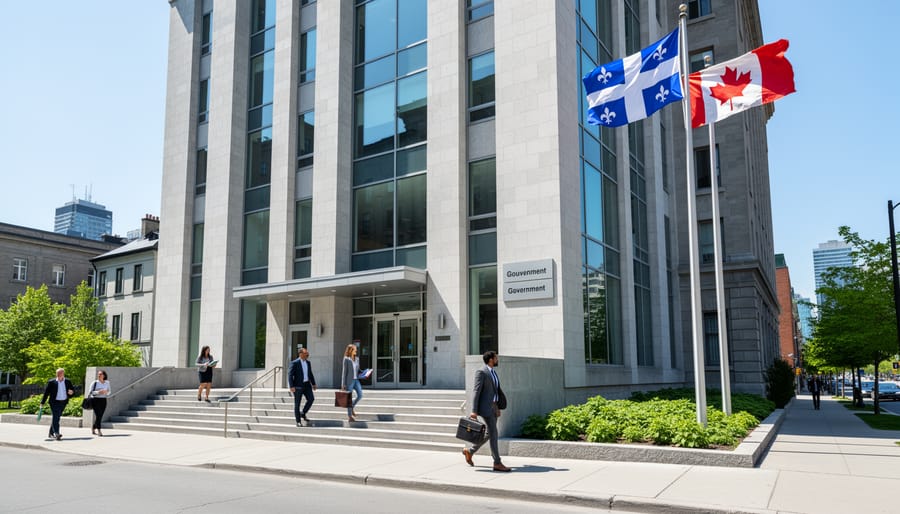
Government positions in Montreal provide stable employment with comprehensive benefits, though openings remain selective. The job outlook for program officers unique to government in Quebec shows a limited but steady forecast for the 2025-2027 period. Approximately 1,900 people work in these specialized government occupations across the province, indicating a well-established sector with defined career paths.
Public sector roles typically require specific educational credentials matched to the position, often including university degrees in relevant fields such as public administration, social sciences, or specialized technical areas. Bilingual proficiency carries significant weight in federal government positions, while provincial and municipal roles may have varying language requirements depending on the department and public-facing responsibilities.
The advantages of government employment extend beyond job security. Comprehensive pension plans, generous vacation allotments, professional development opportunities, and structured advancement through defined classification levels attract candidates seeking long-term career stability. Work-life balance tends to be more predictable than in private sector roles, with standard hours and clear protocols.
Competition for government positions can be intense, with formal application processes, written exams, and panel interviews common. Candidates should prepare for thorough vetting, including background checks and verification of credentials. While the hiring timeline often extends several months, successful applicants gain access to one of Montreal’s most stable employment sectors with established protections and benefits.
Other Growing Sectors in Montreal
Montreal’s economy extends well beyond technology and security into several other thriving sectors that offer diverse career paths. The aerospace industry remains a cornerstone employer, with opportunities ranging from aircraft manufacturing and engineering to maintenance and aviation technology roles. Salaries in aerospace typically reflect the specialized skills required, making it an attractive option for those with technical backgrounds.
The gaming industry has established Montreal as a global hub, housing major studios and independent developers. Positions span game design, programming, art and animation, project management, and quality assurance. This sector appeals to creative professionals who also possess technical capabilities.
Finance and business services continue to grow, with banks, insurance companies, consulting firms, and accounting practices offering positions from entry-level analysts to senior management. These roles often require strong analytical skills and, depending on the employer, varying levels of bilingual proficiency.
Healthcare provides steady employment across clinical, administrative, research, and support roles. Montreal’s hospitals, research centers, and health technology companies serve both English and French-speaking populations, creating demand for bilingual healthcare professionals.
Artificial intelligence represents one of Montreal’s fastest-growing fields, with research institutions and startups creating positions in machine learning, data science, and AI ethics. Many of these roles intersect with other sectors, including cybersecurity, healthcare, and finance, offering interdisciplinary career opportunities for those with advanced technical training.
Language Requirements and Workplace Culture
Montreal’s professional environment reflects Quebec’s bilingual reality, though language requirements vary significantly by industry and role. Many technical positions, particularly in cybersecurity and IT, accept English proficiency alone or offer bilingual options, some specialized roles explicitly require only professional working proficiency in English. Customer-facing positions, government roles, and management jobs typically demand French fluency, as do companies serving Quebec’s broader market.
Workplace culture in Montreal blends North American business practices with French-Canadian traditions. Professionalism remains standard, but expect more informal colleague relationships than in Toronto’s corporate environment. French often dominates internal communications and team meetings, even in officially bilingual workplaces, so learning conversational French accelerates integration and advancement opportunities. Don’t assume you can function long-term in English alone outside purely technical roles.
Job seekers without French should target multinational tech firms, specialized security services with national operations, or roles where technical expertise outweighs language requirements. Building French skills while working opens doors to broader opportunities and demonstrates commitment to Montreal’s professional community. Employers value candidates who respect the province’s linguistic character while bringing needed expertise.
Common Questions About Working in Montreal
Do I need to speak French to work in Montreal?
Not always. Many roles, particularly in technology and cybersecurity, require only English or offer bilingual options. However, French proficiency expands your opportunities significantly and is often preferred or required for customer-facing positions, government roles, and some sectors.
How competitive is the tech job market in Montreal?
Competition varies by specialization. High-demand fields like cybersecurity show strong hiring activity, with hundreds of security analyst positions currently available across Quebec. Senior roles typically require substantial experience, with positions often seeking 8+ years in specialized areas.
What experience levels do employers typically require?
Requirements span the full spectrum. Entry-level positions exist in security services and various sectors, while specialized technical roles demand advanced credentials. Senior infrastructure and cybersecurity positions commonly require eight or more years of relevant experience.
Are there resources for newcomers seeking employment?
Montreal offers various employment services, including government job boards, industry-specific networking groups, and professional development programs. Many employers provide training and advancement opportunities to help workers build their careers in the city.
The job market’s accessibility depends largely on your field and language skills. Technology sectors often provide the most flexibility for English speakers, while bilingual candidates enjoy broader options across industries. Salary ranges vary considerably by sector and experience level, from entry positions to senior roles commanding competitive compensation packages that reflect Montreal’s status as a major economic center.
Montreal’s career landscape rewards ambition and adaptability. Whether you’re drawn to cybersecurity roles protecting critical infrastructure, security services safeguarding local communities, government positions offering stability, or opportunities in aerospace and tech, the city provides pathways for professionals at every stage. The bilingual environment opens doors rather than closing them, many employers prioritize skills and experience alongside language ability.
Your next career move starts with identifying where your strengths align with market demand. Research companies that match your values, reach out to industry contacts, and don’t hesitate to explore sectors you hadn’t previously considered. If security work appeals to you, established Montreal employers offer career progression from entry-level positions through specialized and management roles, with the community focus and professional development that make long-term careers possible.