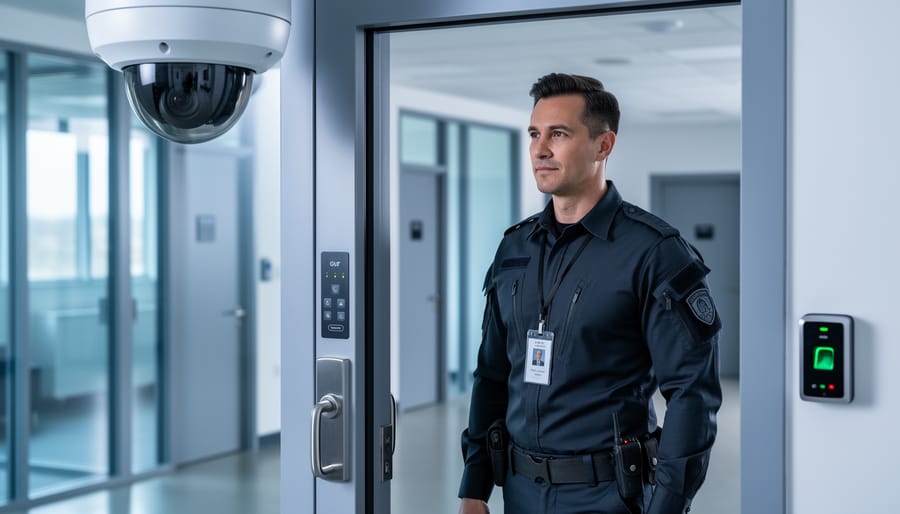
Securing specialized facilities requires a layered approach combining physical barriers, access control protocols, surveillance systems, and continuous operational monitoring to protect high-value assets and maintain regulatory compliance. Whether you manage a pharmaceutical research lab, a data center, a financial services office, or a critical infrastructure site, the stakes are clear: unauthorized access, theft, or operational disruption can cost your organization far more than the investment in proper security measures.
The difference between vulnerable and secure operations lies in systematic implementation. Effective security frameworks start with a thorough risk assessment that identifies your facility’s unique vulnerabilities, then build protective layers specifically designed for your operational needs. This isn’t about installing the most expensive equipment or creating fortress-like barriers that impede daily work. It’s about integrating security measures that protect what matters most while allowing your team to perform their jobs efficiently.
Facility managers who successfully implement secure operations share a common approach: they treat security as an ongoing process, not a one-time project. Regular audits, employee training, and response protocol testing ensure that security measures adapt to evolving threats and operational changes. The most effective programs also foster a culture where every team member understands their role in maintaining security, from following access procedures to reporting suspicious activity.
This guide walks you through the essential steps to establish and maintain secure operations at your facility, from initial assessment through verification and continuous improvement. You’ll learn how to select appropriate security technologies, develop practical protocols your team will actually follow, and build a framework that protects your facility without creating operational bottlenecks.
Understanding Specialized Facility Security Requirements
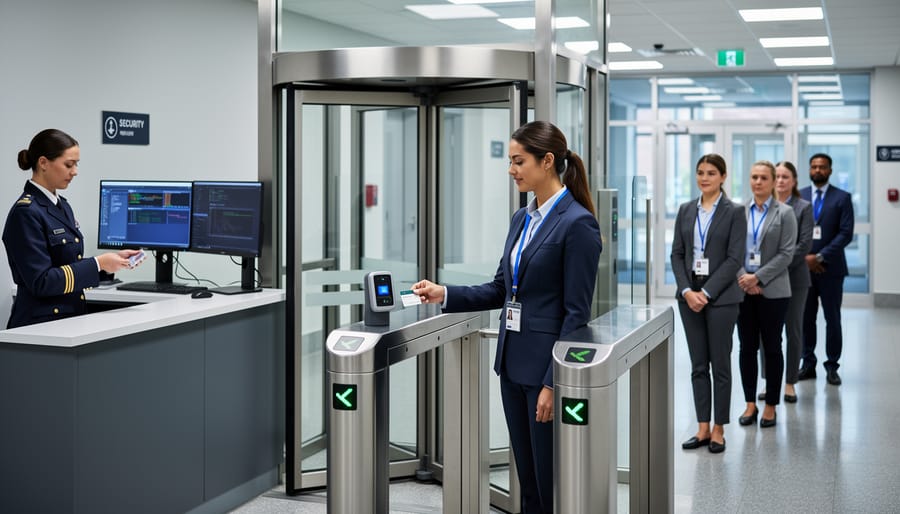
Specialized facilities operate under constraints that standard commercial properties never face. A research laboratory handling biohazardous materials, a healthcare facility storing controlled substances, a data center managing client information, or a manufacturing plant protecting proprietary processes all share a common thread: they cannot afford generic security approaches. These environments demand precision-engineered protection that accounts for regulatory mandates, operational workflows, and asset sensitivity simultaneously.
What distinguishes these facilities from typical office buildings or retail spaces is the intersection of competing pressures. Regulatory bodies impose strict compliance requirements, HIPAA for healthcare data, biosafety protocols for labs, industry-specific access controls for manufacturing. Meanwhile, daily operations require controlled yet efficient movement of authorized personnel, materials, and information. A cardiac research lab needs researchers to access specimens quickly while preventing contamination and unauthorized entry. A pharmaceutical manufacturing facility must track every person entering production zones while maintaining sterile protocols and protecting trade secrets.
The security challenges extend beyond physical barriers. Access control in these environments operates at multiple classification levels: some areas require simple badge authentication, while others demand biometric verification, escort protocols, or time-restricted entry. A data center might allow IT staff unrestricted access to cooling systems while limiting server room entry to specific shift personnel with documented business needs. Healthcare facilities balance patient privacy requirements against emergency access needs, where seconds matter during medical crises.
Operational continuity adds another layer of complexity. Unlike retail stores that can close for security upgrades, specialized facilities often run continuously. Research experiments cannot pause mid-cycle. Patient care cannot stop for system installation. Manufacturing lines operate on tight production schedules. Security implementations must occur without disrupting these critical functions, requiring phased deployments, redundant systems, and carefully coordinated transitions. The physical security for labs framework demonstrates how biological research facilities must layer multiple security controls while preserving researcher workflow and emergency response capability.
Intellectual property protection presents its own unique demands. A manufacturing facility developing next-generation materials faces industrial espionage risks that require monitoring not just who enters, but what they carry, photograph, or transmit. Data centers manage client proprietary information across shared infrastructure, necessitating logical and physical separation that standard building security cannot provide.
Essential Components and Resources Needed
Before implementing secure operations, specialized facilities must assemble the right combination of people, technology, and processes. Missing even one component creates gaps that undermine the entire security framework.
Personnel Requirements
Effective secure operations depend on skilled individuals who understand both security principles and the facility’s unique operational context. Trained security officers form the frontline, but they need specific expertise beyond general security knowledge, familiarity with regulatory requirements, emergency protocols, and the facility’s operational flow. Supervisors coordinate daily operations, manage schedules, and ensure consistent protocol enforcement across shifts. Compliance specialists bridge security operations and regulatory obligations, maintaining documentation and conducting internal audits. For 24/7 coverage, facilities typically require a staffing model that accounts for shift rotation, vacation coverage, and surge capacity during incidents or high-activity periods.
Technology Systems
Integrated technology creates the infrastructure for monitoring, controlling, and documenting security activities. Access control systems manage who enters restricted areas and when, generating audit trails that support both security and compliance needs. NIST guidelines emphasize that physical access controls must align with information security objectives, especially in facilities handling sensitive data. Surveillance cameras provide visual verification and documentation, but they become truly effective when integrated with monitoring platforms that enable real-time response. Intrusion detection systems identify unauthorized access attempts at perimeters and critical zones. Monitoring platforms tie these systems together, allowing security personnel to view multiple data streams simultaneously and coordinate responses efficiently.
The following resources form the essential foundation for specialized facility security:
- Trained security personnel with facility-specific certifications and operational knowledge
- Supervisory staff capable of managing complex security operations and emergency coordination
- Compliance specialists familiar with industry regulations and documentation requirements
- Integrated access control systems with audit trail capabilities and zone-based permissions
- Video surveillance infrastructure with adequate coverage and recording retention
- Monitoring platforms that consolidate multiple security data streams
- Written policies defining security protocols, access procedures, and response escalation
- Compliance checklists aligned with regulatory requirements and audit schedules
- Emergency response procedures documented and accessible to all personnel
Documentation and Administrative Support
Written policies translate security concepts into actionable procedures. Facilities need comprehensive security manuals covering access control, visitor management, incident reporting, and emergency response. Compliance checklists ensure regulatory requirements stay current and verifiable during audits. Standard operating procedures guide daily activities, while incident response plans provide clear direction during emergencies.
Stakeholder Engagement
Leadership buy-in secures necessary budget and resources. Operational staff must understand how security protocols support rather than hinder their work. Involving department heads during planning identifies potential conflicts between security requirements and operational needs before implementation begins.
Critical Safety and Compliance Considerations
Before launching any security implementation, you need to understand the regulatory and operational landscape that governs your facility. Skipping this groundwork can result in compliance violations, operational disruptions, or security gaps that leave your facility more vulnerable than before.
Start by identifying which regulatory frameworks apply to your specific facility type. Healthcare environments must comply with HIPAA privacy and security rules, research laboratories often fall under biosafety regulations and intellectual property protections, data centers face standards like SOC 2 or ISO 27001, and manufacturing facilities dealing with hazardous materials encounter OSHA requirements alongside industry-specific mandates. Privacy laws also intersect with physical security, particularly when surveillance systems capture personally identifiable information or when access logs create audit trails. Understanding these obligations upfront prevents costly retrofits when auditors discover non-compliant systems already installed.
The implementation phase itself introduces temporary vulnerabilities that adversaries can exploit. During system installations, access points may remain temporarily unsecured, surveillance coverage develops blind spots, and staff attention diverts to the transition rather than monitoring. Map these transition risks before starting work. Schedule installations during low-activity periods when fewer personnel are on-site, establish temporary security measures to cover gaps during upgrades, and maintain clear communication with all stakeholders about what protections remain active throughout the process.
Operational continuity deserves equal weight with security improvements. A data center can’t simply shut down servers to install new access controls, and a hospital emergency department can’t pause patient flow for surveillance upgrades. Plan implementations in phases that allow normal operations to continue, even if that extends your timeline. Work with department heads to identify critical functions that cannot be interrupted and design implementation sequences that route around them.
Common pitfalls undermine even well-intentioned security projects. Facilities often underestimate training time, leaving staff confused about new procedures and creating bottlenecks at access points. Others implement systems without considering contingency planning requirements meaning a single system failure paralyzes operations. Some overlook the human factor entirely, deploying protocols so cumbersome that employees find workarounds that compromise security. Test procedures with actual users before full deployment, maintain manual backup processes for electronic systems, and build in redundancy for critical security functions. The goal isn’t just installing security measures but ensuring they work reliably within your facility’s daily reality.
Step-by-Step Implementation Process
Conduct a Comprehensive Security Assessment
Start with a systematic walk-through of your entire facility. Document every entry point, restricted area, and asset location on a detailed floor plan. For a research lab, this means mapping not just exterior doors but sample storage rooms, equipment areas, and data server locations. For healthcare facilities, chart patient areas, pharmacy access, and medical records storage. In manufacturing settings, identify raw material zones, production floors, and shipping/receiving docks.
Evaluate your current security measures against facility-specific threats. Does your access control system differentiate between clearance levels? Can visitors move through restricted zones unescorted? Are high-value assets visible from public areas? Review incident logs from the past year to spot patterns: repeated false alarms, unauthorized access attempts, or gaps in coverage during shift changes.
Consult with department heads and frontline staff who understand daily operations. A lab supervisor knows which equipment requires highest protection; a plant manager understands production flow vulnerabilities. These conversations reveal operational constraints your security protocols must accommodate, like emergency access requirements or material transfer procedures that can’t be disrupted.
Document compliance obligations specific to your industry, whether HIPAA for medical facilities, export controls for research labs, or chain-of-custody requirements for manufacturing. Your assessment should identify where current practices fall short of these standards, creating a prioritized list of vulnerabilities that your security framework must address.
Develop Customized Security Protocols
Developing effective security protocols starts with documenting facility-specific procedures that reflect your unique operational environment. Begin by mapping your access control framework: define authorization levels for different zones, establish clear criteria for granting credentials, and outline badge management procedures including issuance, suspension, and revocation processes.
Your visitor management protocol should detail pre-registration requirements, check-in procedures, escort policies for restricted areas, and badge return verification. For facilities handling sensitive materials or proprietary assets, create material handling security procedures that specify transport routes, documentation requirements, and chain-of-custody protocols.
Emergency response plans must address facility-specific scenarios such as hazardous material incidents, data breaches, or medical emergencies. Document notification sequences, evacuation routes that account for secured zones, lockdown procedures, and coordination with external emergency services. Include clear decision trees for different threat levels.
Establish comprehensive incident reporting procedures that define what constitutes a reportable event, specify documentation requirements, outline notification chains, and set investigation timelines. Ensure all protocols align with industry regulations applicable to your facility type while maintaining operational efficiency. Every procedure should answer who, what, when, and how questions to eliminate ambiguity during implementation.
Deploy Integrated Security Systems
Implementing technology solutions requires a coordinated deployment approach that prioritizes system interoperability and operational continuity. Start by installing access control systems at all entry points, ensuring each reader or credential device connects to a centralized management platform. Configure user permissions based on role and clearance level, creating distinct access zones that match your facility’s security requirements.
Integrate surveillance cameras with your monitoring infrastructure so security personnel can verify access events in real time. Position cameras to eliminate blind spots at critical chokepoints, and ensure footage streams to both on-site monitoring stations and remote command centers for redundancy. Connect intrusion detection sensors to your alarm management system, programming automated alerts that notify both facility staff and security responders simultaneously.
Establish encrypted communication channels linking all security system components. Your access control platform should communicate with surveillance systems, allowing operators to pull up live video when an access anomaly occurs. Connect mobile patrol units and remote monitoring centers to this same network, ensuring guards can receive alerts, view camera feeds, and coordinate responses from any location.
Build redundancy into every critical system component. Deploy backup power supplies for access control and surveillance equipment, maintain secondary communication pathways in case primary networks fail, and establish failover protocols that keep security operations running during system maintenance or unexpected outages.
Train Personnel and Stakeholders
Effective security depends on people as much as systems. Security personnel need facility-specific training covering proprietary protocols, emergency response procedures, and specialized technology operation. This goes beyond basic workplace skills to include understanding the facility’s unique vulnerabilities, restricted zones, and escalation procedures.
General staff require focused training on access control compliance, visitor escort requirements, security awareness fundamentals, and incident reporting channels. They need to understand how their daily actions contribute to operational security without compromising workflow efficiency.
Develop competency-based training that includes hands-on practice with access systems, scenario-based emergency drills, and clear documentation of procedures. Initial onboarding should be comprehensive, but ongoing education matters equally. Schedule quarterly refreshers for general staff and monthly updates for security teams to address protocol changes, emerging threats, or new technology.
Track training completion and competency assessments to identify gaps. When personnel demonstrate strong professional skills in security protocols, they become force multipliers who reinforce secure operations across every shift and department.
Establish Monitoring and Response Procedures
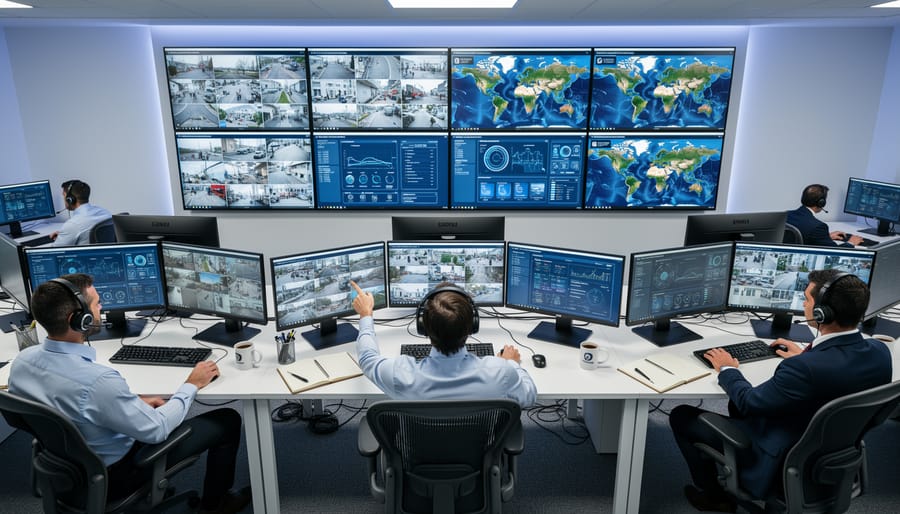
Continuous monitoring transforms security protocols from reactive measures into proactive protection. Establish a central monitoring hub where trained personnel can observe multiple surveillance feeds, access control alerts, and intrusion detection systems simultaneously. Define clear escalation protocols that specify when supervisors must be notified, when facility management should be contacted, and which situations require immediate law enforcement involvement.
Document response procedures for common scenarios, unauthorized access attempts, equipment malfunctions, medical emergencies, or suspicious activity, so monitoring staff can act decisively without hesitation. Coordinate with local emergency services before incidents occur, sharing facility layouts, access points, and contact information to streamline response when seconds matter.
For facilities requiring round-the-clock protection, integrate mobile patrol units that conduct physical inspections during scheduled intervals while remote monitoring covers continuous observation. This layered approach addresses blind spots and ensures human presence complements technology. Test communication channels regularly between monitoring stations, patrol units, and facility personnel to confirm reliability under pressure.
Schedule periodic drills that simulate various security scenarios, allowing your team to refine response times and identify procedural gaps before facing real threats.
Verifying Effectiveness and Ongoing Improvement
Implementing secure operations is just the beginning; confirming they work as intended requires systematic verification and a commitment to continuous improvement. Regular audits form the foundation of this process, examining access logs, incident reports, and compliance documentation to identify gaps before they become vulnerabilities. These reviews should occur quarterly at minimum, with more frequent checks for high-risk facilities or during periods of operational change.
Testing emergency response procedures validates that protocols work under pressure. Conduct unannounced drills simulating various scenarios, unauthorized access attempts, medical emergencies, fire evacuations, or system failures, and observe how security personnel and facility staff respond. These exercises reveal whether training essentials have taken root and where communication breaks down. Document response times, decision-making processes, and coordination effectiveness for each drill.
Gathering feedback from facility personnel provides ground-level insights that audits might miss. Security officers working daily patrols notice patterns and inefficiencies, while general staff experience how protocols affect their workflow. Schedule monthly debriefs with security teams and quarterly surveys with broader facility personnel to capture this intelligence.
Monitor key performance indicators that reflect operational security health:
- Average response time to incidents and alarms
- Incident resolution rates and time to closure
- Compliance status across regulatory requirements
- Access control system effectiveness (unauthorized attempts detected and prevented)
- Staff adherence to security protocols during spot checks
- System uptime and maintenance completion rates
Schedule formal reviews every six months to analyze trends across these metrics and assess whether current protocols still match facility needs. Adjust procedures when you observe declining performance indicators, recurring incident types, regulatory changes, facility expansions, or shifts in threat landscape. Continuous improvement means treating secure operations as a living framework that evolves with your facility, not a static checklist. Investing in ongoing security team skills development ensures personnel can adapt as protocols mature and threats change.

Real-World Application: Case Study
A mid-sized pharmaceutical research facility in eastern Canada faced mounting security challenges as its operations expanded. The site housed sensitive research data, controlled substances, and proprietary formulations across multiple buildings with varying access requirements. Security incidents had become more frequent, and the facility struggled to maintain compliance with both Health Canada regulations and internal corporate security standards.
The facility partnered with a specialized security provider to overhaul its entire security framework. The assessment phase revealed critical gaps: inconsistent access control across buildings, inadequate monitoring of controlled substance storage areas, and security personnel unfamiliar with pharmaceutical industry requirements. Visitor procedures varied by department, creating compliance vulnerabilities.
The implementation began with deploying integrated access control systems that enforced role-based permissions and maintained detailed audit trails. Surveillance coverage expanded to all critical areas, with monitoring handled through a combination of on-site personnel and remote oversight during off-peak hours. Security officers received specialized training in pharmaceutical security protocols, controlled substance handling procedures, and regulatory compliance requirements.
The facility established clear escalation procedures and integrated security systems with its existing operational technology. Regular drills tested emergency response capabilities, while monthly audits verified compliance with access protocols.
Within six months, the facility achieved demonstrable improvements in its security posture. Compliance audits showed stronger access control documentation and incident response capabilities. Staff reported greater confidence in security protocols, and the facility successfully passed its regulatory inspection without security-related findings. The operations director noted that the integrated approach resolved long-standing coordination issues between security and research teams, creating a foundation for sustainable secure operations as the facility continues to grow.
Common Questions About Secure Operations for Specialized Facilities
How long does implementation typically take?
Timeline varies based on facility complexity and existing infrastructure, but most implementations span three to six months from initial assessment through full deployment. Phased rollouts allow facilities to maintain operations while gradually introducing enhanced security measures, with critical systems prioritized first.
What budget considerations should facilities plan for?
Budget planning should account for upfront technology investments, ongoing personnel costs, training programs, and system maintenance. Many facilities find that integrated solutions combining physical guards with technology offer better value than purely technology-based approaches, especially when operational continuity depends on human judgment and immediate response capability.
How do secure operations scale with facility growth?
Well-designed security frameworks scale through modular components that expand with new zones, increased personnel, or additional locations. Cloud-based access control and monitoring platforms accommodate growth without complete system overhauls, while security protocols can be adapted and extended to cover expanded operations.
What happens during staff turnover?
Documented protocols and comprehensive training programs ensure consistency despite personnel changes. Staff readiness depends on thorough onboarding processes, clear security documentation, and regular refresher training that keeps both security personnel and general employees current on facility-specific procedures.
Maintaining secure operations requires addressing these practical concerns proactively. Protocol updates should occur at least annually, with immediate revisions triggered by security incidents, regulatory changes, or significant operational modifications. Most modern security systems integrate with existing infrastructure through standardized protocols and APIs, though older legacy systems may require bridge solutions or phased replacement. The key is building flexibility into your security framework from the start, treating it as an evolving system rather than a one-time implementation.
Securing specialized facilities is not a one-time project but an ongoing commitment to protecting people, assets, and operations. The framework outlined here demonstrates that effective security requires a systematic approach: thorough assessment, customized protocols tailored to your facility’s specific requirements, integrated technology that works together seamlessly, and personnel trained to handle your unique environment.
What sets successful secure operations apart is continuous improvement. Regular audits, testing, and stakeholder feedback ensure your security measures evolve with changing threats and operational needs. This cycle of assessment and refinement maintains the effectiveness of your security posture over time.
Every specialized facility faces distinct challenges based on its industry, regulatory environment, and operational complexity. Working with security providers who understand these nuances makes the difference between generic protection and comprehensive security that supports your mission rather than hindering it.
If you’re responsible for securing a healthcare facility, research lab, data center, or manufacturing environment, consider how a customized security approach could strengthen your operations while meeting compliance requirements and protecting what matters most.